Welcome
Why this Unit?
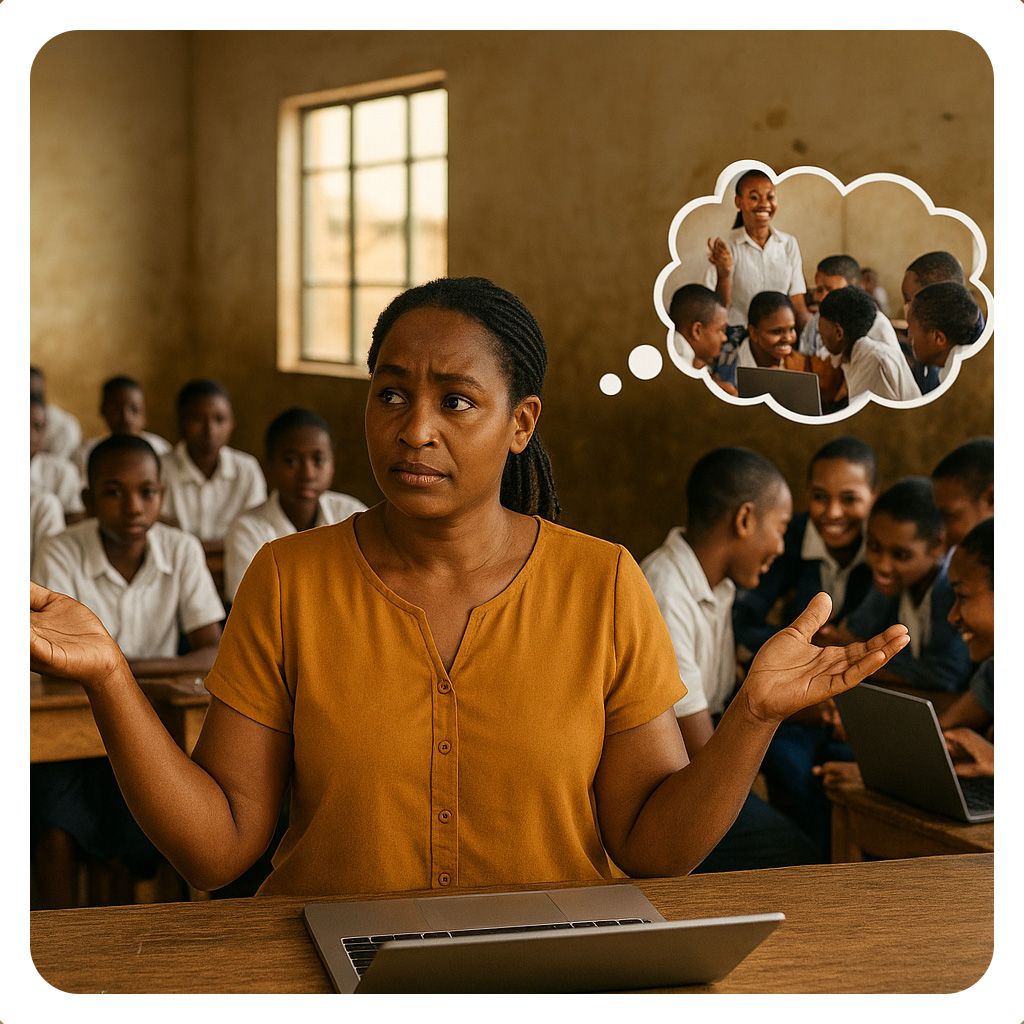
Progressive pedagogies emphasize active, student-centered learning approaches that help you create more engaging and meaningful learning experiences. As classrooms continue to evolve, integrating ICT has become essential in supporting collaboration, creativity, and problem-solving among your learners. These approaches align closely with Tanzania’s competence-based curriculum, which encourages interactive and learner-driven instruction. Completing this Unit will strengthen your ability to use ICT tools that enhance progressive teaching methods in your classroom effectively. It will also empower you to design, implement, and evaluate innovative learning activities that improve your learners’ engagement and overall achievement.
Unit Competencies
By the end of this unit, you will be able to:
To begin your learning journey, navigate to the lessons provided. You will find a series of lessons, activities, and resources specifically curated to help you integrate technology into your curriculum.
Instructions
Repeat steps 1–4 until you complete all the lessons.
Introduction
This lesson introduces you to the foundations of progressive pedagogical approaches that place learners at the center of the teaching and learning process. Unlike traditional teacher-centered methods, progressive pedagogies emphasize active student participation, meaningful engagement, creativity, and critical thinking. You will explore key learner-centered strategies such as inquiry-based learning, collaborative problem-solving, and constructivist approaches, and understand how these transform classrooms into interactive, dynamic, and inclusive spaces for deeper and long-lasting learning.
Please click on Resources 1a and 1b below to begin the lesson on progressive pedagogies.
Progressive Pedagogies Discussion
Use the forum below to engage with your peers by discussing this question:
In your opinion, how do progressive pedagogies (like inquiry-based or collaborative learning) differ from traditional teacher-centered approaches? Share examples from your own learning experiences.
Instructions
Quiz on Lesson 1
After participating in the forum discussion, test your understanding by completing the short quiz below.
Instructions:
 Introduction
This lesson introduces you to digital tools that promote interactive, collaborative, and engaging learning experiences. The focus is on using tools such as Learning Management Systems (LMSs), interactive apps, collaboration platforms, and digital content creation tools to make teaching more student-centered and effective.
Digital tools
Assignment on Lesson 2
Instructions
Introduction
This lesson provides participants with practical skills to design and deliver lessons that integrate ICT effectively in order to support active, student-centered learning. You will learn how to align digital tools with specific learning objectives and outcomes, ensuring that technology serves as a means to improve teaching and learning rather than just an add-on. The topic introduces lesson planning strategies and showcases approaches such as flipped classrooms, project-based learning, and collaborative problem-solving as models for enhancing student engagement, creativity, and critical thinking.
Please click Resource 6 to learn how you can plan your lesson. Use your notebook to summarize the key points on how to align ICT with learning objectives.Open Resource 7 to learn more about Practical ICT-Supported Approaches for Student-Centred Teaching
Try out your understanding by attempting this lesson quiz.
Introduction
This lesson equips you with the ability to assess how effectively ICT tools and strategies are being used to support learning. Evaluation goes beyond checking if technology was used; it focuses on whether ICT improved teaching quality, student engagement, and learning outcomes. You will explore different evaluation methods, identify success indicators, and practice using feedback to refine your teaching.
Resource 8 gives some evaluation methods and indicators of success during evaluation. Go through Resource 8 and make a 2-paragraph summary.
Test your understanding by completing the short quiz below.
Introduction
This lesson highlights the common challenges teachers face when integrating ICT into progressive pedagogies and provides practical strategies for addressing them. It emphasizes equity, inclusivity, and best practices to ensure that all learners—regardless of background or resources—benefit from ICT.
Go through Resource 9 to uncover common challenges associated with ICT integration in teaching and learning. Note down 3 key challenges in your notebook that you can use later in the discussion forum.You have now explored how ICT can support progressive, student-centred teaching — including flipped lessons, collaborative/group work with one device, project-based tasks, low-data strategies, equity and inclusion, and how to evaluate ICT use for continuous improvement.
Please respond to both questions below:
Looking at your own teaching context (school, subject, resources, learners):

In this unit, you explored how progressive, learner-centred pedagogies can be strengthened through the purposeful use of ICT. You examined approaches such as inquiry-based learning, collaboration, flipped classrooms, and project-based learning, and learned how digital tools can support engagement, creativity, and deeper learning when aligned with clear learning objectives and learner needs.
You also developed practical skills in selecting, designing, and evaluating ICT-supported lessons, with attention to accessibility, equity, and real classroom contexts. By reflecting on challenges and best practices, you are now better equipped to make realistic, context-appropriate improvements to your teaching that support inclusive and effective learning.
References
OER / Open Courseware / Articles

ICT to Support Progressive Pedagogies by Tanzanian Ministry of Education, Science and Technology, is licensed under a Creative Commons Attribution-ShareAlike 4.0 International License.
Manager: Alcardo Barakabitze and Nelson Msagati
Adapt OER: