Resource 9: Offline and mobile friendly tools for Virtual and Flipped Learning
Reliable internet access cannot always be assumed in many school contexts. For this reason, effective virtual and flipped learning should include tools and strategies that work offline, on mobile devices, or with minimal connectivity. Offline-friendly approaches ensure that all learners can participate, regardless of bandwidth, device availability, or location.
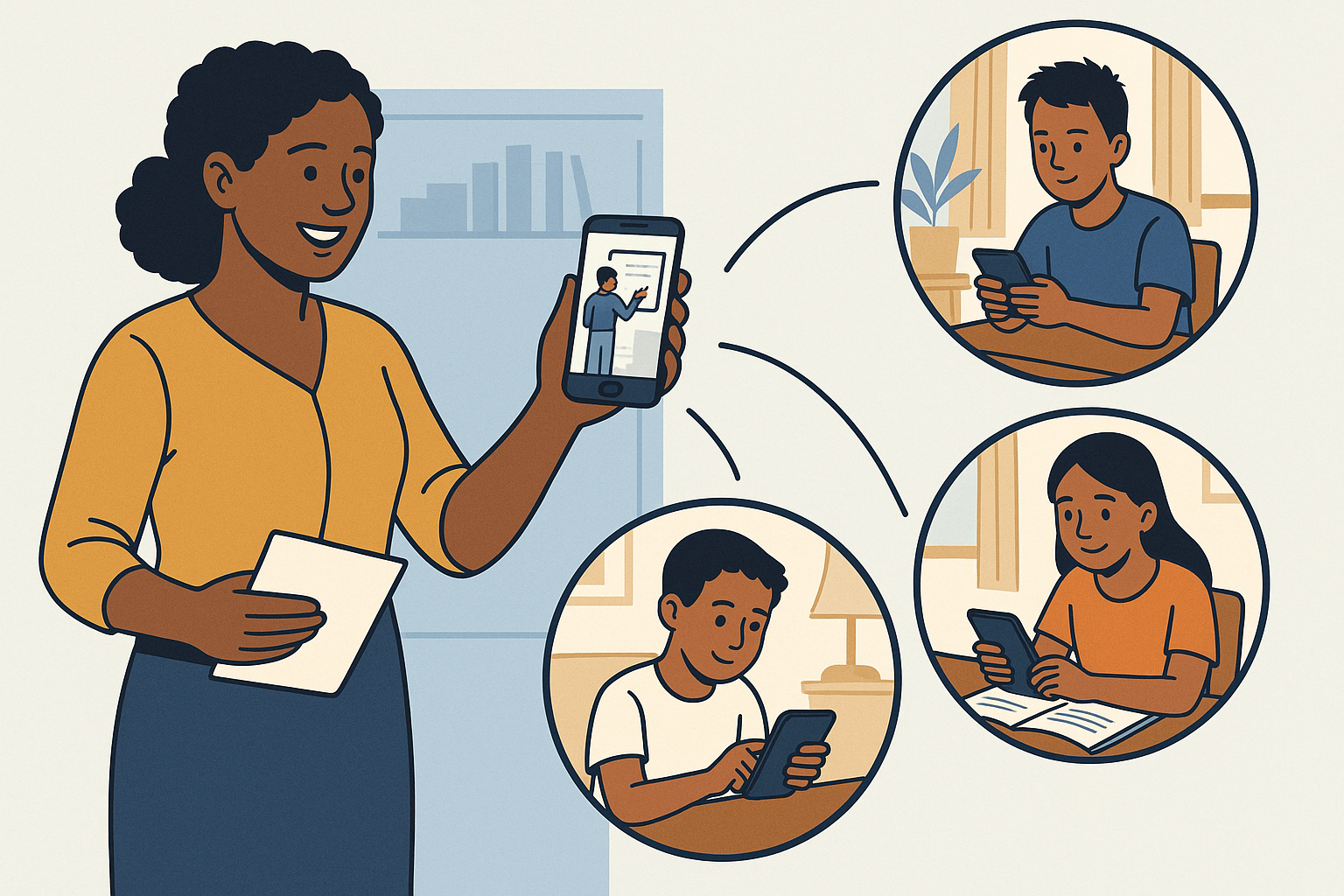
Mobile phones are often the most widely available digital devices in schools and communities. Teachers can create and share short audio explanations, images, PDFs, or low-resolution videos that learners can access using basic smartphones. Tools such as WhatsApp can be used to distribute learning materials, collect short voice-note responses, and support discussion, even where learners connect intermittently rather than continuously.
Several tools support offline or low-data content creation and access. Videos can be recorded using a phone or laptop and shared via USB drives, memory cards, school computers, or played in class. Offline Moodle, Kolibri, or locally hosted learning servers allow schools to store digital content that learners can access without the internet. Interactive activities created with H5P can also be used offline when hosted on a local server or school network.
Teachers can further support inclusion by combining digital tools with low-tech alternatives, such as printed worksheets linked to video or audio content, paper-based quizzes following offline videos, or reflection activities completed in exercise books. The key principle is flexibility: designing learning experiences that work both online and offline, allowing every learner to engage meaningfully.
Key takeaway: Virtual and flipped learning does not depend on constant internet access. By prioritising mobile-friendly, offline-capable tools and simple sharing methods, teachers can create inclusive digital learning experiences that work effectively in low-resource and low-connectivity environments.