Welcome
 Why this Unit?
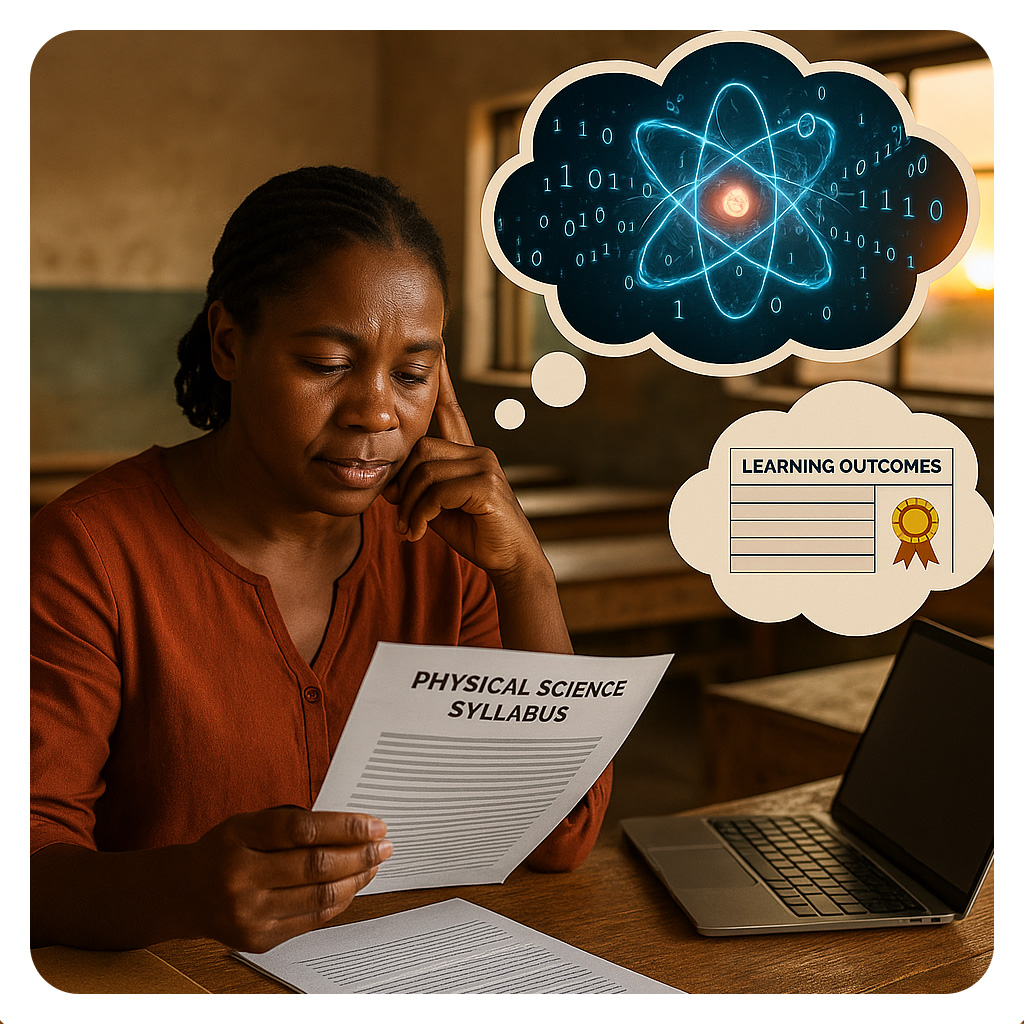
Information and communication technology (ICT) has become an essential component of modern education, transforming how you access resources and engage your learners. In Tanzania’s competency-based curriculum, ICT provides opportunities for more interactive, learner-centered, and flexible teaching approaches. As schools increasingly integrate digital tools, you need a clear understanding of how technology supports competency-based education, subject content and pedagogical practices. Completing this Unit will strengthen your confidence and skills in selecting and using ICT tools effectively in your daily teaching. It will also enable you to leverage technology to enhance your learners’ outcomes and meet curriculum goals more efficiently.
Unit Competencies
The competencies acquired through this unit will enable you to:
Introduction
Welcome to lesson 1 that focuses on benefits of ICT in supporting curriculum implementation.
Instructions
 Introduction
Welcome to Lesson 2 where we look into how ICT can act as a tool to facilitate curriculum implementation. Follow instructions to work on each learning activity.
Instructions
Introduction
Welcome to Lesson 3 where we focus on Curriculum and ICT Opportunities. Curriculum analysis in relation to ICT means examining the curriculum to see how digital technologies can be integrated to improve teaching and learning. It looks at where and why these tools should be used. It also includes the use of free and Open Educational Resources (OER). While helping in making the curriculum richer and more accessible. ICT integration is one of the opportunities that supports student engagement, improves learning outcomes, and develops 21st-century skills. Read Resource 9 to learn more about Curriculum Analysis in Relation to ICT. Summarize your observations in one paragraph.
Instructions
Now let us investigate how you might use ICT to support the teaching of a lesson
Welcome to Lesson 4 where we look into ICT Integration in Curriculum Practice. ICT can be used to help us explore the curriculum and identify meaningful entry points for integrating it into teaching and learning practices. Through this sub-unit, you will gain practical skills in analyzing subject syllabi, schemes of work, and lesson plans to uncover how ICT can enrich content delivery, promote learner engagement, and nurture 21st-century skills. The sub-unit also emphasizes aligning ICT use with national Education and Training Policy (ETP) goals, curriculum and classroom realities. By the end of this sub-unit, you will be better equipped to transform your teaching practices, making the curriculum more interactive, inclusive, and responsive to the digital age.
Lesson Outcomes
This lesson will enable you to:
Watch Resource 12 on Integration of Technology in the Classroom and summarize your observations in one paragraph
Instructions
Use your subject official syllabus, Scheme of Work and Lesson Plan to perform the following activities:
Integrating ICT into curriculum practice helped you to see that technology is most effective when it directly supports learning goals and complements traditional methods. By mapping digital tools to specific subject areas such as simulations in Science Subjects or online quizzes in Mathematics subject can make lessons more interactive and engaging. At the same time, you should value the balance between face-to-face strategies and digital resources, as both are needed for effective teaching. While challenges like access and confidence with ICT remain, we believe thoughtful integration can transform learning into a more inclusive, creative, and meaningful experience.
 1. ICT in the Secondary Education Curriculum
ICT plays a key role in achieving the goals of the Secondary Education Curriculum by enhancing teaching, learning, and assessment. In the Tanzanian context, ICT helps students develop digital literacy, problem-solving skills, communication, collaboration, and creativity competencies that align with National Education Goals and the Global digital economy.
ICT integration supports learner-centered teaching by enabling access to online resources, digital textbooks, simulations, and interactive learning platforms. Teachers use ICT to prepare lessons, present multimedia content, and assess students’ understanding more effectively. Through the inclusion of ICT in the curriculum, learners are better prepared for higher education and the modern job market.
2. ICT Integration in Curriculum Practice
ICT integration in curriculum practice means using technology purposefully to support learning competencies rather than treating it as a separate subject. Effective integration involves aligning ICT tools with curriculum content and pedagogical strategies.
Teachers play a central role by designing lessons that use ICT to describe complex concepts, facilitate research, and encourage collaboration through group projects. For example, students may use presentation software for project reports or online learning platforms for homework and feedback.
However, successful integration requires adequate teacher training, reliable infrastructure (electricity, internet, and devices), and supportive school administration. Teachers Continuous Professional Development (TCPD) ensures teachers are confident in using ICT to enrich classroom instruction.
Conclusion
ICT supports curriculum goals by improving access to information, enhancing teaching methods, and fostering active learning. With integrating ICT into curriculum practice and applying it through practical projects prepare learners for the demands of the 21st century. With proper infrastructure, teacher training, and policy support, ICT can transform education in Tanzania into a more dynamic, inclusive, and skills-oriented system.

ICT Supporting Curriculum Goals by Tanzanian Ministry of Education, Science and Technology, is licensed under a Creative Commons Attribution-ShareAlike 4.0 International License.
Learning Designer: Phorosia Makhanda
Adapted OER: