Importance of Data Privacy and Ethical Use
 Data Privacy & Ethical Use of Assessment Technologies
A practical message to Tanzanian teachers
As classrooms in Tanzania continue to adopt digital tools such as Google Forms, Moodle, WhatsApp, or mobile apps; teachers are no longer handling only chalk and paper as a result. We are now handling data: student names, marks, IDs, videos, assignments, and feedback. And just like money or keys, this data must be handled with responsibility.
What is Data Privacy?
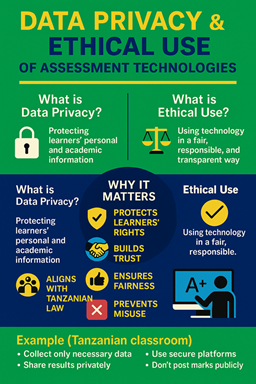
Data privacy simply means protecting learners’ personal and academic information. When we collect data using ICT tools, we must ensure that:
- Information is kept confidential
- It is used only for learning purposes
- Learners (or parents, when necessary) know and agree to how it will be used
This includes names, grades, ID numbers, assessment scores, photos, or voice recordings. Such information should never be shared carelessly on WhatsApp groups, in public notice boards, or with unauthorized people.
What is Ethical Use of ICT in Assessment?
Ethics is about using technology in a fair, responsible and transparent way. An ethical teacher:
- Respects the dignity and privacy of students
- Avoids exposing learners to ridicule or harm
- Does not use technology to discriminate or advantage a few
- Is honest and unbiased in collecting, storing and sharing results
Ethical use is not only about prevention of mistakes it is about building a culture of respect and fairness.
Why it matters especially in Tanzania
- Protects learners’ rights: Students trust us with their information. Exposing it can cause shame, bullying, or long-term harm.
- Builds trust with families and communities: Parents will accept ICT more easily when they know it is handled responsibly.
- Ensures fairness in assessment: Bias, favouritism, or careless sharing of results damages academic integrity.
- Prevents misuse: Without rules, people may alter marks, leak information, or expose students.
- Promotes responsible digital citizenship: Teachers model habits that learners will also practise in their future workplaces.
- Aligns with Tanzanian law: The Tanzania Cybersecurity Act and institutional policies require ethical handling of data. Ignoring this can have legal consequences.
- A Practical Example (Tanzanian classroom)
Imagine you are using Moodle or Google forms for a test:
- Collect only what is necessary e.g. name and registration number
- Share results privately, never in a general WhatsApp group
- Use platforms with secure logins and strong passwords
- Do not post marks on noticeboards or share screenshots carelessly
Small habits like these protect your learners.
Before you use any digital assessment tool, ask yourself:
- Am I collecting more data than I need?
- Who will have access to this information?
- Is it stored securely (phone, laptop, cloud)?
- Will students feel respected and protected?
- Would I be comfortable if my own child’s data were handled this way?
If the answer to any of these is “No”, then pause and adjust your practice.
Final Word to Teachers
Digital assessment is powerful it saves time, gives fast feedback, and supports modern pedagogy. But without privacy and ethics, it can cause harm, break trust, and even break the law.
It is not enough to know how to use ICT tools.
A professional teacher must also know how to use them responsibly.
That is what makes ICT-based assessment truly educational not harmful.