Welcome
 Why this Unit?
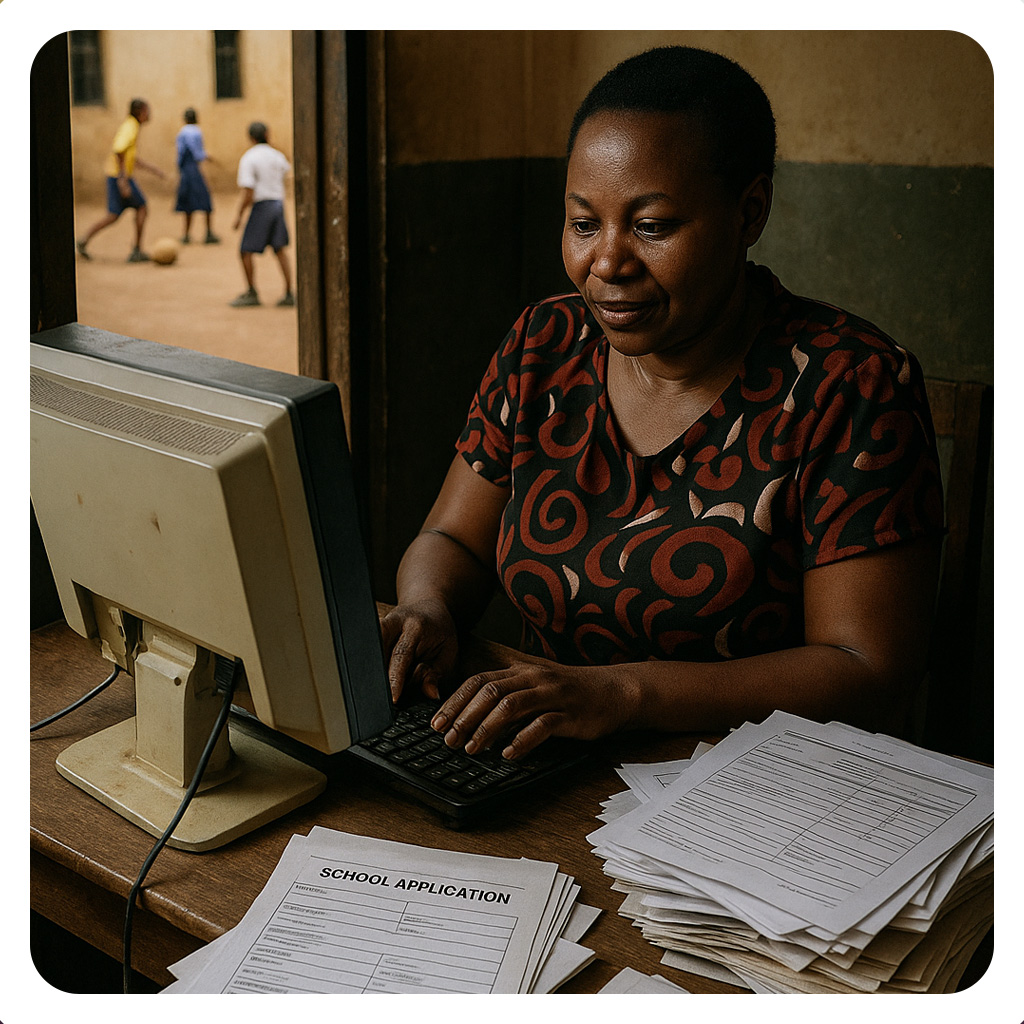
Digital administrative tools for schools and organising the physical learning environment is a Unit designed to strengthen your understanding of how technology can streamline school operations and create more effective learning spaces. In today’s classrooms and school environments, digital systems and well-organised physical settings are essential for supporting teaching, learning, and administrative efficiency. In this unit, you will explore the models of deploying Information and Communication Technologies (ICT), examine digital tools that improve administrative processes, and analyse approaches for managing e-waste responsibly. This Unit is important because it equips you with the knowledge to enhance institutional efficiency while promoting safe and sustainable technology use. By completing it, you will be able to apply digital administrative solutions and contribute to a safer, more organised, and environmentally responsible school environment.
Unit Competencies
By the end of this Unit you will be able to:
 Introduction
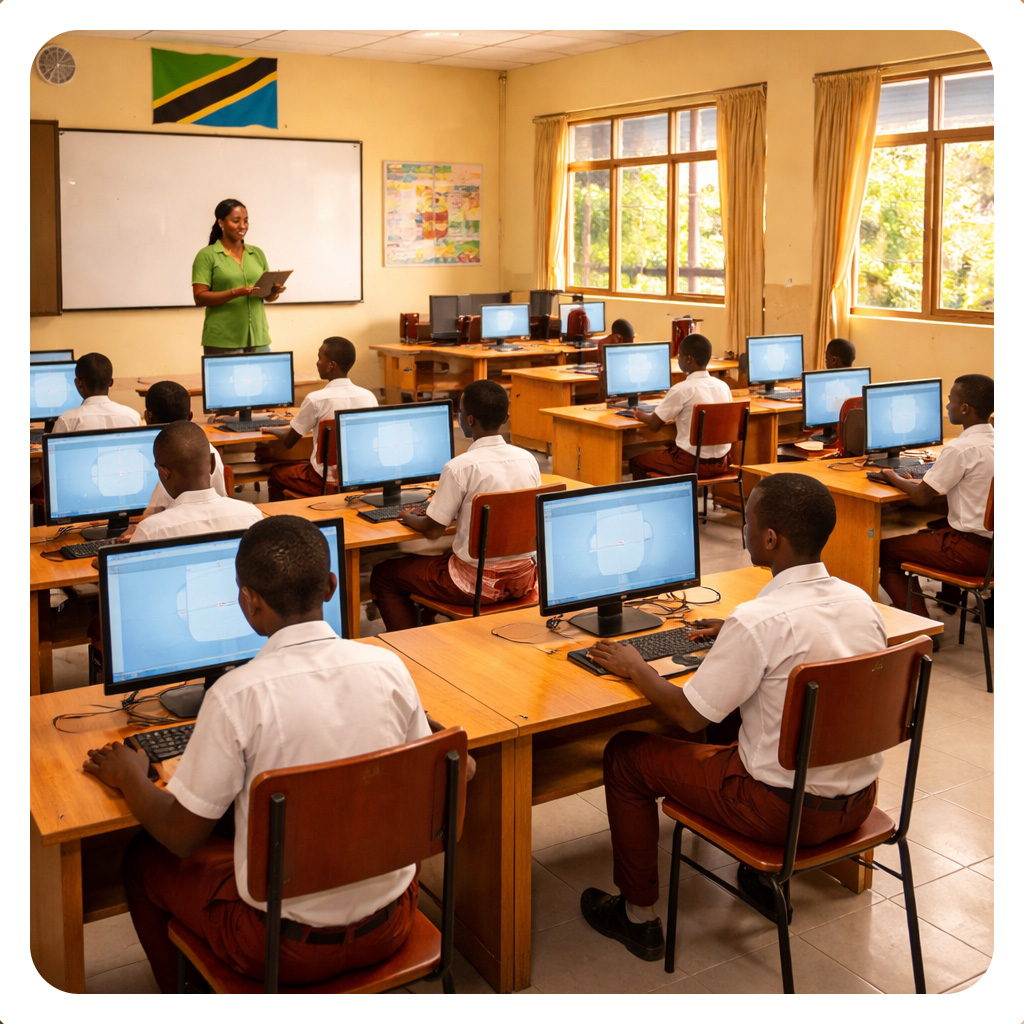
Tanzanian schools can adopt several models for deploying ICT, each with different strengths depending on available resources and infrastructure. Computer labs are the most common approach, allowing many learners to access shared computers in a dedicated room, ideal for scheduled ICT lessons. Some schools integrate computers directly into classrooms, enabling teachers to use digital content during everyday lessons, while computer clusters place a small group of machines in shared spaces for rotational use across classes. Many schools also rely on mobile phones and tablets, which are affordable, portable, and effective for accessing offline content or supporting group work. Another increasingly popular option is the laptop or tablet trolley, a secure, mobile charging cabinet that teachers can book and roll into their classroom, allowing students to work on individual devices during the lesson. Together, these models offer multiple pathways for integrating ICT into teaching and learning, even in low-resource environments.
Lesson outcomes
By the end of this unit, you will be able to:
Identify and analyse different models of deploying ICT in schools.
Evaluate the advantages and limitations of each model.
Recommend suitable ICT deployment strategies for effective integration in education.
Instructions
Open Resources 1 and 2 provided below and carefully read the section on “ICT Deployment Models.” As you go through the text, identify key ideas and examples that explain different ways ICT can be arranged or implemented within a school setting.
Discussion:
As a class let us discuss how each school might be different and require different models of ICT deployment. Use the forum to discuss what would work best in your school.
Introduction
School administration systems and information systems are becoming increasingly important in Tanzanian schools as they help teachers and leaders manage essential data more efficiently and accurately. These systems can support tasks such as recording attendance, tracking student performance, managing timetables, storing assessment results, and communicating with parents or guardians. Whether a school uses a simple spreadsheet, an offline database, or a full-featured platform like Student Information System (SIS) and School Education Management Information System (SEMIS), or other locally adopted solutions, the goal is the same: to reduce administrative workload and improve decision-making. By digitising records and streamlining processes, these systems help schools operate more transparently and allow teachers to focus more time on teaching and supporting learners.
Lesson outcomes
By the end of this lesson, you will be able to:
Instructions
ICT tools provide a variety of packages designed to enhance and streamline administrative processes in schools. The article offers insights into specific areas where ICT can play a significant role in facilitating and improving administrative work. Open and read Resources 3 and 4 below to explore the articles on school administration Package.
 Introduction
As more ICT equipment enters Tanzanian schools, it is increasingly important to understand how to manage electronic waste (e-waste) responsibly. Old or broken devices such as computers, phones, chargers, and batteries can release harmful chemicals if they are thrown away with normal rubbish or burned, which poses risks to learners, staff, and the environment. Schools can help reduce these risks by creating simple procedures for identifying unusable equipment, storing it safely, and working with certified local recyclers or collection programmes when available. Even small actions—such as repairing devices where possible, reusing components, and avoiding unsafe disposal—contribute to a healthier school environment and support national efforts to manage e-waste sustainably.
Lesson outcomes
By the end of this lesson, you will be able to explore the types of e-waste commonly found in schools, models of how institutions can safely discard it, and the dangers of improper disposal.
InstructionsAs ICT becomes more integrated into education, schools are accumulating more electronic devices — from computers and tablets to projectors and printers. But what happens when these devices become outdated or stop working?
In this forum, reflect on the growing challenge of electronic waste (e-waste) in your school. Consider the following:

In this unit, you explored how digital administrative tools and well-planned ICT deployment models can improve efficiency, organisation, and decision-making in schools. You examined different approaches to deploying ICT—such as computer labs, classroom-based devices, mobile solutions, and shared equipment—and learned how digital school administration systems can support tasks including record management, communication, planning, and monitoring learner progress.
You also developed an understanding of responsible e-waste management and the importance of safe, sustainable practices when handling outdated or broken ICT equipment. By the end of this unit, you should be better equipped to make informed, context-appropriate decisions that enhance school operations, support teaching and learning, and contribute to a safer, more organised, and environmentally responsible school environment.
The following Open Education Resources (OER) were consulted and/or adapted to create this unit.

Digital Administrative Tools for Schools and Organising the Physical Learning Environment by Tanzanian Ministry of Education Science, and Technology is licensed under a Creative Commons Attribution-ShareAlike 4.0 International License.
Unit Learning Designers:
Adapted OER: